Korean Bibimbap
Uitgelicht onder: Traditionele wereldgerechten
Korean Bibimbap is a vibrant and delicious mixed rice dish topped with a variety of vegetables, protein, and a spicy gochujang sauce.
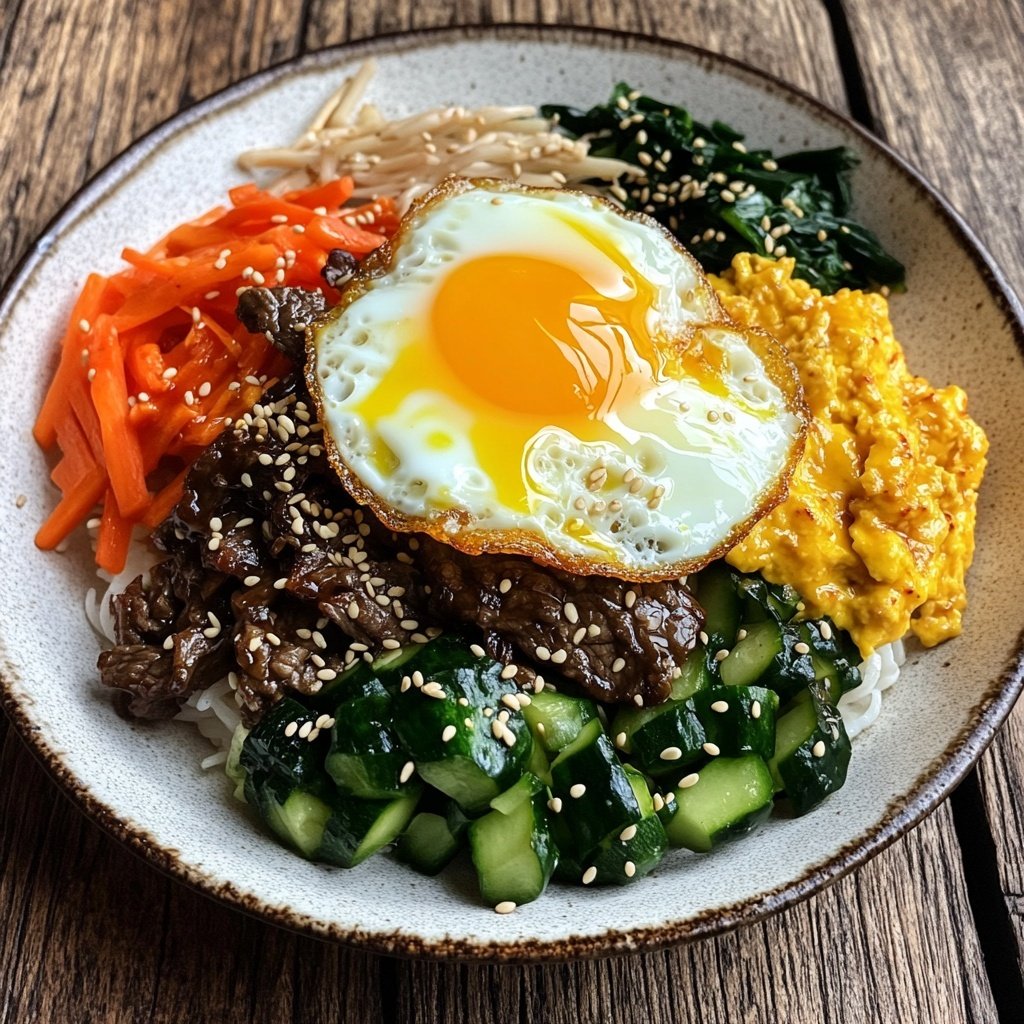
Korean Bibimbap is not just a meal; it’s a culinary experience that brings together a medley of colors, flavors, and textures. This dish is a staple in Korean cuisine, and its name literally means 'mixed rice'. Each ingredient in bibimbap is prepared separately, allowing for a beautiful presentation and a delicious burst of flavor in every bite.
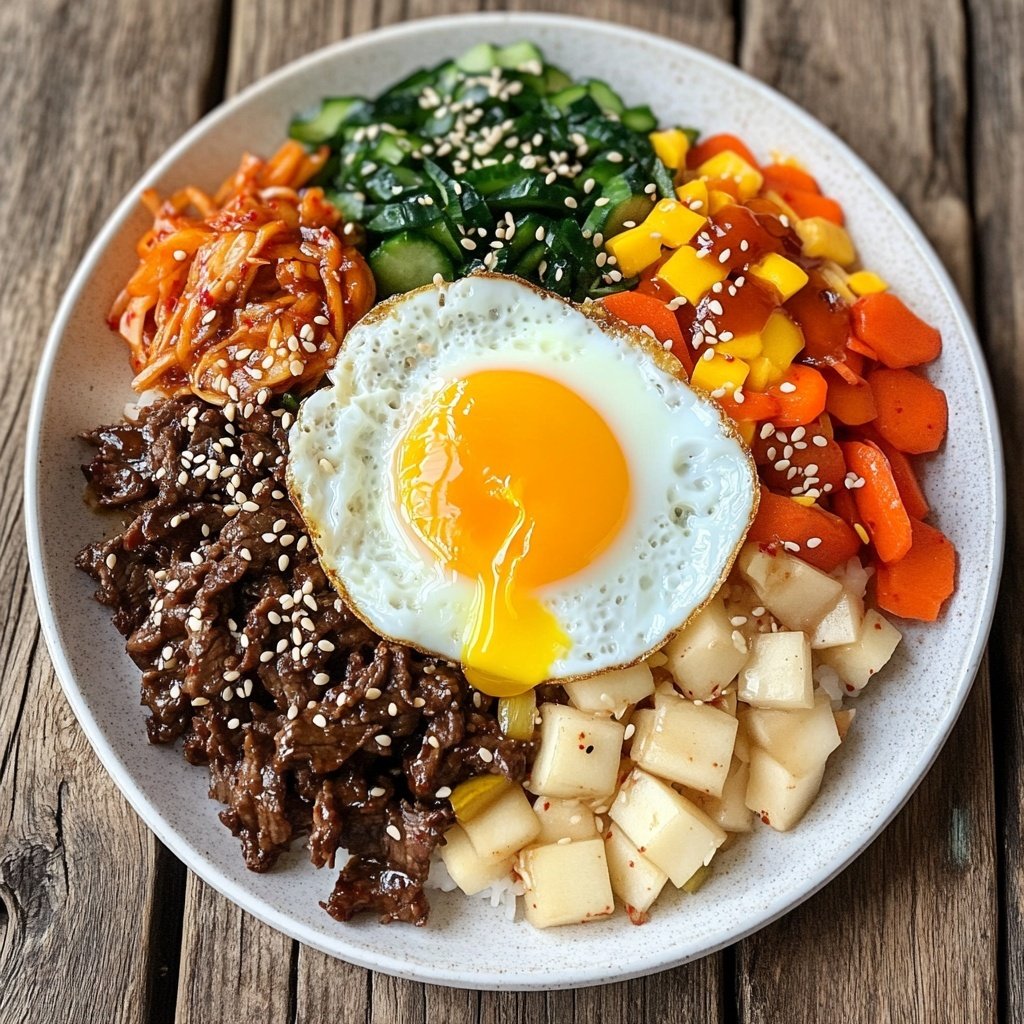
Why You'll Love This Recipe
- A beautiful array of colors that makes for an appealing presentation
- Endless customization options with your favorite vegetables and proteins
- A perfect balance of flavors from the spicy gochujang and fresh ingredients
The History of Bibimbap
Bibimbap is a traditional Korean dish that has deep cultural roots, dating back to the 5th century. Originally, it was a royal dish served to the kings and nobles, showcasing the finest ingredients and culinary techniques. The name 'bibimbap' literally translates to 'mixed rice,' which perfectly encapsulates the essence of this dish—a delightful medley of flavors and textures, all served in one bowl.
Over the centuries, bibimbap evolved from a humble farmers' meal to a celebrated dish enjoyed by people from all walks of life. Each region in Korea has its own variation, incorporating local ingredients and flavors, which adds to the dish's rich diversity. Whether enjoyed at home or in a restaurant, bibimbap remains a symbol of Korean hospitality and culinary artistry.
Nutritional Benefits
Bibimbap is not only visually appealing but also packed with nutritional benefits. The dish is loaded with vegetables, providing essential vitamins and minerals that are vital for overall health. Spinach, carrots, and bean sprouts are all low in calories yet high in fiber, making bibimbap a satisfying meal that supports digestive health.
The addition of protein, whether it be eggs, tofu, or meat, ensures a well-rounded meal. Eggs offer high-quality protein and healthy fats, while plant-based proteins like tofu provide similar benefits for those following a vegetarian diet. With the right balance of ingredients, bibimbap can be tailored to fit various dietary preferences while remaining nutritious.
Customizing Your Bibimbap
One of the most exciting aspects of bibimbap is its versatility. You can easily customize this dish to suit your taste preferences or dietary needs. Try swapping out vegetables for seasonal favorites, such as zucchini, bell peppers, or even roasted sweet potatoes. Each ingredient brings its own unique flavor and nutritional benefits, allowing you to create your perfect bowl.
For protein options, consider grilled chicken, beef bulgogi, or even a hearty mix of legumes for a plant-based version. You can also adjust the spiciness of the dish by modifying the amount of gochujang to suit your palate. This flexibility makes bibimbap a great choice for family meals, where everyone can enjoy their personalized versions.
Ingrediënten
Gather all the ingredients before starting to prepare your bibimbap.
Ingredients for Korean Bibimbap
- 2 cups cooked jasmine rice
- 1 cup spinach, blanched
- 1 cup carrots, julienned
- 1 cup bean sprouts, blanched
- 1 cup shiitake mushrooms, sliced and sautéed
- 4 eggs
- 4 tablespoons gochujang (Korean chili paste)
- 2 tablespoons sesame oil
- Sesame seeds for garnish
- Green onions for garnish
Once you have all your ingredients ready, you can start assembling your bibimbap.
Bereidingswijze
Follow these steps for a delicious bibimbap experience.
Prepare the Rice
Cook the jasmine rice according to package instructions. Once cooked, fluff and set aside.
Sauté the Vegetables
In a large pan, sauté the julienned carrots and shiitake mushrooms in sesame oil until tender. Set aside.
Cook the Eggs
Fry the eggs sunny-side up in a separate pan until the whites are set but the yolks remain runny.
Assemble the Bibimbap
In a bowl, place a serving of rice at the bottom. Arrange the blanched spinach, carrots, bean sprouts, and sautéed mushrooms on top. Add the fried egg in the center and drizzle with gochujang. Sprinkle sesame seeds and green onions for garnish.
Serve
Mix everything together before eating to enjoy a harmonious blend of flavors!
Enjoy your homemade Korean Bibimbap!
Professionele Tips
For added flavor, try marinating the vegetables in soy sauce and sesame oil before cooking.
Frequently Asked Questions
Bibimbap can be stored in the refrigerator for up to 3 days. To reheat, simply warm the rice and vegetables in a pan. However, it's best to fry the egg fresh for optimal texture and flavor. If you prefer to meal prep, consider storing each ingredient separately to maintain freshness.
For those seeking a gluten-free option, ensure to use gluten-free gochujang, as some brands may contain wheat. You can also substitute jasmine rice with brown rice or quinoa for a healthier alternative.
Serving Suggestions
Bibimbap is typically served as a main dish, but it can also be accompanied by traditional Korean side dishes known as banchan. These may include kimchi, pickled vegetables, or a light soup, which complement the flavors of the bibimbap and enhance the dining experience.
Pair your bibimbap with a refreshing drink, such as iced barley tea or a sweetened Korean rice drink called Sikhye. The lightness of these beverages balances the richness of the dish, making for a satisfying meal.
Tips for the Perfect Bibimbap
To achieve the best texture in your bibimbap, ensure that your rice is fluffy and slightly sticky. This helps the ingredients cling together when mixed, enhancing the overall experience. Using a short-grain rice variety, like sushi rice, can also improve the texture.
When preparing your vegetables, consider using a variety of cooking methods—steaming, sautéing, or even grilling—to bring out different flavors and textures. This not only adds depth to the dish but also keeps the meal exciting with each bite.
Vragen Over Recepten
→ Can I make bibimbap vegetarian?
Absolutely! Simply omit the egg or use a vegan egg substitute and add more vegetables.
→ What can I substitute for gochujang?
You can use sriracha mixed with a bit of miso paste as a substitute, although the flavor will differ slightly.
→ Can I prepare the ingredients in advance?
Yes! You can prepare the vegetables and rice a day ahead and store them in the refrigerator.
→ Is bibimbap gluten-free?
It can be gluten-free if you ensure the gochujang and any sauces used are gluten-free.
Korean Bibimbap
Gemaakt door: Jessica Brown
Recepttype: Traditionele wereldgerechten
Vaardigheidsniveau: Intermediate
Eindportie: 4 servings
Wat je Nodig Hebt
Ingredients for Korean Bibimbap
- 2 cups cooked jasmine rice
- 1 cup spinach, blanched
- 1 cup carrots, julienned
- 1 cup bean sprouts, blanched
- 1 cup shiitake mushrooms, sliced and sautéed
- 4 eggs
- 4 tablespoons gochujang (Korean chili paste)
- 2 tablespoons sesame oil
- Sesame seeds for garnish
- Green onions for garnish
Stappen
Cook the jasmine rice according to package instructions. Once cooked, fluff and set aside.
In a large pan, sauté the julienned carrots and shiitake mushrooms in sesame oil until tender. Set aside.
Fry the eggs sunny-side up in a separate pan until the whites are set but the yolks remain runny.
In a bowl, place a serving of rice at the bottom. Arrange the blanched spinach, carrots, bean sprouts, and sautéed mushrooms on top. Add the fried egg in the center and drizzle with gochujang. Sprinkle sesame seeds and green onions for garnish.
Mix everything together before eating to enjoy a harmonious blend of flavors!
Extra Tips
For added flavor, try marinating the vegetables in soy sauce and sesame oil before cooking.
Voedingswaarde (Per Portie)
- Calories: 550 kcal
- Total Fat: 20g
- Saturated Fat: 4g
- Cholesterol: 186mg
- Sodium: 500mg
- Total Carbohydrates: 79g
- Dietary Fiber: 4g
- Sugars: 5g
- Protein: 15g